Feed & Nutrition
How to Feed Chickens Properly: Feed and Basic Nutrient Requirements
Chicken nutrition basics: energy, fat, protein and amino acids, vitamins, minerals, calcium, and water, plus feed ingredients and feed values by age.
Published: · 13 min read
Contents (21)
- 01How to Feed Chickens Properly: Feed and Basic Nutrient Requirements
- 02Why feeding chickens properly matters
- 03What’s in layer, broiler, chick, and other feeds?
- 04Energy needs and the role of carbohydrates
- 05The role of fats in chicken nutrition
- 06Protein and amino acid needs
- 07What vitamins do
- 08Minerals and the importance of calcium
- 09Water: a basic nutrient that should not be overlooked
- 10Not every chicken should get the same feed
- 11Feed values by chicken age and production purpose
- 12Feed form and choosing a feed
- 13Why aren’t grain mixes enough on their own?
- 14Balanced nutrition and production costs
- 15Chicken Feeding FAQs and Key Points
- 16Can chickens be fed only corn and wheat?
- 17Is it harmful to give chickens extra grain or treats?
- 18Why do laying hens get a separate feed?
- 19What should you do if eggshells are thin or soft?
- 20How long can chicken feed be stored?
- 21How can you tell if chickens are not getting enough nutrition?
How to Feed Chickens Properly: Feed and Basic Nutrient Requirements
1. Why feeding chickens properly matters
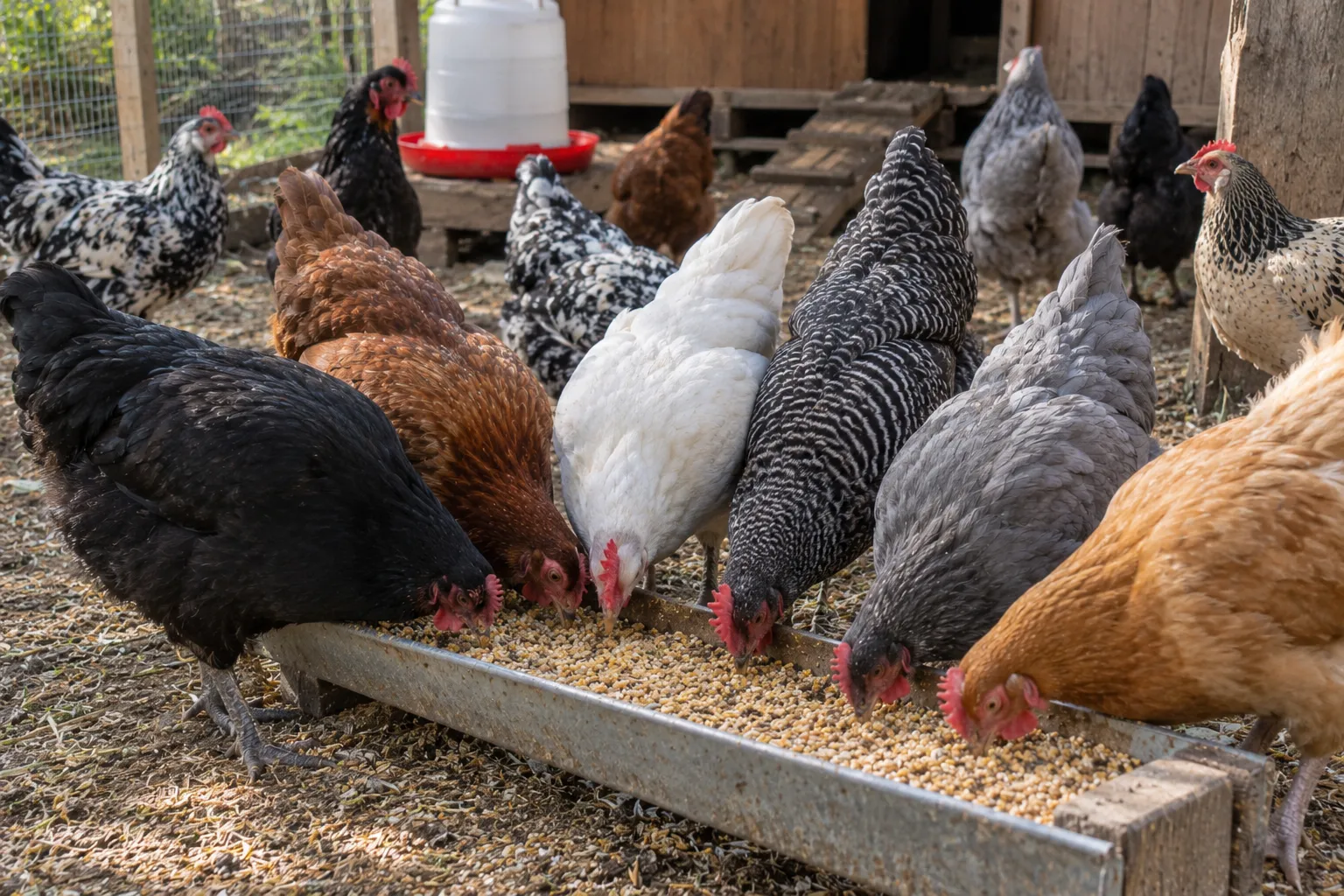
Feeding chickens does not simply mean filling their stomachs. Feeding means making sure the bird gets the nutrients it needs, in the right amounts, to stay alive, grow, and produce eggs or meat. The nutrients chickens need cannot be fully supplied by a single feed ingredient (for example, barley or wheat alone). That is because grain, oilseed meal, or any other single feedstuff on its own does not contain all the nutrients a chicken needs in the right proportions.
For this reason, a balanced chicken diet must contain adequate amounts of the following basic components:
- Carbohydrates
- Fats
- Proteins and essential amino acids
- Vitamins
- Minerals
- Water
Each of these nutrients has a different job. So looking only at the protein percentage or the energy content of a feed is not enough to tell whether that feed meets all of a chicken’s needs.
What’s in layer, broiler, chick, and other feeds?
Chicken feeds are made by mixing different ingredients to meet the bird’s energy, protein, vitamin, and mineral needs. The most commonly used ingredients are generally:
| Ingredient group | Examples | Main purpose |
|---|---|---|
| Grains | Corn, wheat, barley, sorghum | Provide energy |
| Plant protein sources | Soybean meal, sunflower meal, canola meal | Provide protein and amino acids |
| Fats | Vegetable oils | Increase energy density, provide essential fatty acids |
| Mineral sources | Limestone, dicalcium phosphate, salt | Provide calcium, phosphorus, and other minerals |
| Vitamin and mineral premixes | Vitamin and trace mineral mixes | Supply missing micronutrients |
| Amino acid supplements | Methionine, lysine, threonine | Balance amino acids |
Important: Not every chicken feed contains all of these ingredients. The components used vary with the type of feed, the age of the birds, and the production purpose. Fish meal and other animal protein and fat sources may also be used in some formulas.
2. Energy needs and the role of carbohydrates
Above all, chickens need energy to stay alive. Energy drives the chemical reactions that take place in the body. When energy needs are not met, other nutrients such as vitamins, minerals, and amino acids cannot be sufficient on their own.
The main sources of energy in feed are carbohydrates, fats, and proteins.
Carbohydrates make up the largest share of poultry diets. They come mainly from grains such as corn, wheat, sorghum, barley, rye, and millet.
Carbohydrates come in two basic forms:
- Digestible carbohydrates: Compounds such as starch that can be used to produce energy.
- Indigestible carbohydrates: Compounds such as cellulose that the chicken’s digestive system cannot fully break down.
On feed labels, indigestible carbohydrates are usually listed under crude fiber. Fiber can play important roles in gut health. However, too much fiber can hurt growth and increase susceptibility to intestinal problems.
So it matters not only that chicken feed contains grain, but also that carbohydrates and fiber are at balanced levels.
3. The role of fats in chicken nutrition
Fats are nutrients that provide a large amount of energy per unit of weight. Adding animal fats or vegetable oils to chicken feed can increase its energy density.
The roles of fats go beyond supplying energy. They also:
- Help with the absorption of fat-soluble vitamins.
- Can improve the physical properties and palatability of feed.
- Help pellets hold together better and make feed easier to shape during manufacturing.
- Chickens cannot synthesize essential fatty acids, particularly linoleic acid, in their bodies, so they must get them from their feed. That makes dietary fats not just an energy source but also a source of necessary fatty acids.
In hot weather, replacing part of the energy from carbohydrates with energy from fats in some rations can help reduce heat stress in chickens.
Do fats affect egg composition?
Yes. The fatty acid composition of the egg yolk can be influenced by the fatty acids the laying hen consumes.
Feed ingredients rich in omega-3 fatty acids, such as flaxseed and fish meal, can affect the omega-3 content of eggs. So the way a hen is fed can change not only egg production but also some nutritional properties of the egg.
4. Protein and amino acid needs
Amino acids are essential nutrients chickens need to grow and build body proteins. However, when assessing a chicken’s protein needs, looking only at the total protein percentage of the feed is not enough. The amino acids that make up proteins must also be present in adequate amounts.
Chickens can synthesize some of the amino acids they need themselves, but they must get others from their feed. Sources state that chickens can synthesize 10 of the 20 amino acids they need, while the other 10 must come from feed ingredients.
In addition, adding pure, crystalline amino acids to feed can help make up for missing amino acids without increasing the amount of every feed ingredient. This avoids oversupplying other amino acids and wasting nutrients.
5. What vitamins do
Vitamins take part in the chemical processes chickens need to use the carbohydrates, fats, and proteins they eat for body functions.
Vitamins are grouped as fat-soluble and water-soluble.
| Vitamin | Main role |
|---|---|
| Vitamin A | Vision and reproductive health |
| Vitamin D | Bone formation and calcium metabolism |
| Vitamin E | Biological antioxidant function |
| Vitamin K | Normal blood clotting |
| B vitamins | Energy metabolism reactions |
Vitamins are found in varying amounts in different feed ingredients. However, no single feed ingredient (for example, barley, wheat, or oilseed meals on their own) supplies all vitamins in the proportions a chicken needs. On top of that, vitamin levels can vary between different batches of the same ingredient.
For this reason, sources note that using vitamin premixes is a common approach to meeting chickens’ vitamin needs.
Another important detail is vitamin C. Because chickens can make their own vitamin C, it does not need to be added to their feed.
6. Minerals and the importance of calcium
Minerals are needed for bone formation, for maintaining electrolyte balance in cells, and for various chemical reactions in the body.
In brief, minerals do the following:
- Involved in bone formation: Calcium, phosphorus, and magnesium.
- Contribute to electrolyte balance in cells: Sodium, potassium, and chloride.
- Needed in small amounts and involved in chemical reactions: Zinc, manganese, iron, copper, selenium, and iodine.
Grains are generally deficient in some of the basic minerals chickens need. So mineral supplements may be needed when preparing a balanced feed.
Why is calcium important?
Calcium matters both for normal skeletal development and for eggshell formation in laying hens. Limestone, marble dust, oyster shell, and meat and bone meal are among the ingredients that can supply calcium.
With phosphorus, too, looking only at the total amount is not enough. A large part of the phosphorus in plants is in a form called phytate, which animals cannot use directly. That is why phosphorus sources such as dicalcium phosphate or meat and bone meal are used.
This is also why it is important to pay attention to the available phosphorus value when choosing feed. This value refers to the amount of phosphorus that is not bound to phytate and that the bird can use.
7. Water: a basic nutrient that should not be overlooked
In chicken nutrition, water is just as important as the other nutrients. Water is needed to maintain the body’s biological functions.
All chickens need access to enough clean drinking water. Water intake and feed intake are directly linked. Chickens generally drink about twice as much water as the amount of feed they eat.
Chickens that cannot reach water do not eat. Chickens also try to cool themselves by panting during heat stress, and water plays an important role in this process. Without enough water, it becomes harder for them to regulate their body temperature.
So water is needed not just to quench thirst, but also for feed intake, normal body functions, and temperature regulation.
8. Not every chicken should get the same feed
One point that deserves special emphasis: choose a feed that suits the chickens’ age and the purpose they are raised for.
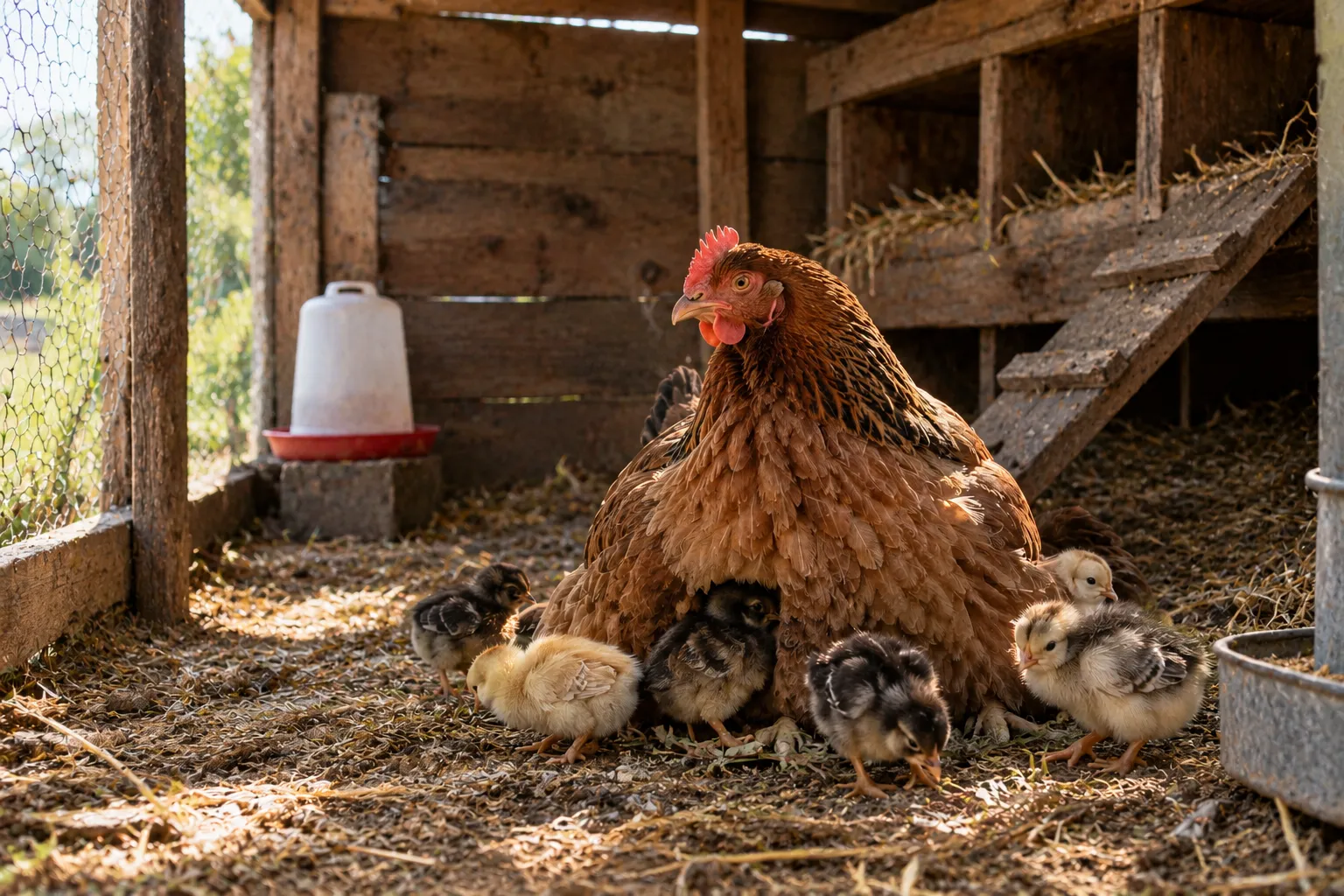
Chickens raised for meat, growing chicks, pullets, and laying hens do not need the same nutrient levels. So a feed that suits one group of chickens may provide too much or too little for another.
For example, the calcium level in layer feeds can exceed 4%. Feeding this to young broilers can cause leg abnormalities.
Likewise, the protein needs of growing broilers can be higher than those of laying hens or of broilers that are finishing their growth.
When choosing a feed, it is recommended to consider these three questions:
- What type of chicken am I feeding?
- How many weeks or months old are the chickens?
- What am I raising the chickens for?
The answers to these questions help determine the right type of feed.
9. Feed values by chicken age and production purpose
As an example, the table gives typical nutrient densities for different groups of chickens.
| Chicken group | Protein | Methionine | Lysine | Calcium | Available phosphorus | Fat | Fiber |
|---|---|---|---|---|---|---|---|
| Broiler starter (weeks 1–3) | 22% | 0.50% | 1.30% | 0.95% | 0.45% | 5.0% | 2.5% |
| Broiler grower (weeks 4–6) | 20% | 0.45% | 1.15% | 0.90% | 0.40% | 5.5% | 2.5% |
| Broiler finisher (week 7 onward) | 18% | 0.50% | 0.95% | 0.85% | 0.35% | 6.0% | 2.5% |
| Pullet starter (weeks 1–6) | 20% | 0.45% | 1.10% | 1.00% | 0.45% | 4.0% | 3.0% |
| Pullet grower (weeks 7–18) | 17% | 0.35% | 0.80% | 0.95% | 0.40% | 4.0% | 3.0% |
| Laying hen (week 19 onward, in production) | 16–18% | 0.35–0.45% | 0.75–0.85% | 3.50–4.50% | 0.35–0.50% | 4.0% | 3.0–4.0% |
As the table shows, feed composition changes with the chickens’ stage of development. For example, protein is 22% in broiler starter feed, while a range of 16–18% is given for laying hens in production.
The difference in calcium is even more pronounced. Layer feed contains 3.50–4.50% calcium, while the values given in the table for the different broiler stages are lower.
This table should be read as typical nutrient densities, not as a fixed formula for all chicken breeds and raising conditions.
10. Feed form and choosing a feed
Chicken feeds can be made in different physical forms. They can come as mash (the most basic form, made by grinding and mixing the ingredients), crumbles (pellets that have been mechanically broken into smaller pieces (crumbled)), or pellets (feed ingredients compressed into small cylindrical sticks).
Layer feeds are mostly offered as mash, ground or mixed without going through pelleting.
According to the source, pelleting broiler feeds can improve feed efficiency by about 4%. This is not a value that guarantees the same result on every farm, but a general example reported in the source.
11. Why aren’t grain mixes enough on their own?
One common mistake in feeding chickens is using cracked grains or grain mixes in place of a complete feed (a feed formulated to meet all of an animal’s daily nutrient needs, such as vitamins, minerals, protein, and carbohydrates, on its own without any other supplement; for example, broiler, layer, and chick feeds).
Grains do not contain all the amino acids, vitamins, and minerals a chicken needs in the right proportions.
So grain mixes should not replace a complete, balanced feed.
Adding grains to these complete feeds can raise the total energy of the mix while lowering its protein, vitamin, and mineral density. As a result, the nutrient balance of the chicken’s total ration can be thrown off.
The key distinction here is this: the fact that chickens eat a feedstuff or that it provides energy does not mean it is a complete source of nutrition on its own.
12. Balanced nutrition and production costs
Through their metabolism, chickens can break down the nutrients in these ingredients and convert them into structures their bodies can use. This process makes it possible to obtain meat and eggs fit for human consumption. But for this to happen, the chicken must be given the basic nutrients it needs in a balanced way.
Feed costs can make up about 70% of the cost of animal production. So a balanced feeding program is important both for meeting the animals’ needs and for getting adequate output from production.
The answer is not simply to give more feed: chickens should be given a nutritionally balanced feed suited to their age and production purpose, along with enough clean water.
Chicken Feeding FAQs and Key Points
1. Can chickens be fed only corn and wheat?
No. Corn and wheat provide energy, but on their own they do not supply all the proteins, amino acids, vitamins, and minerals chickens need in adequate proportions. That is why the foundation of the diet should be a balanced complete feed suited to the birds’ age and production purpose.
2. Is it harmful to give chickens extra grain or treats?
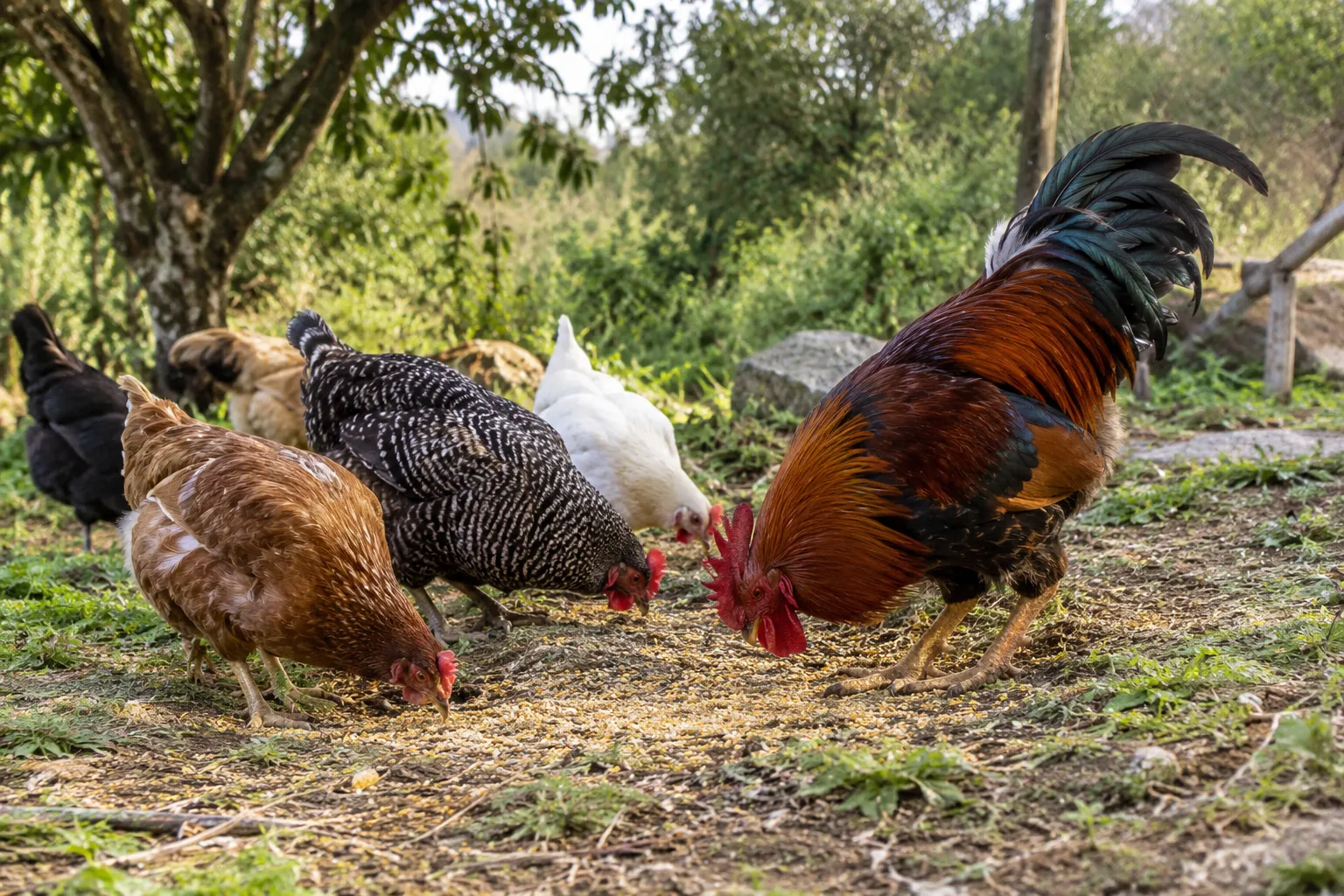
Giving large amounts of grain and extra foods can cause chickens to eat less of their balanced feed and throw off their nutrient balance. If grains are given, they should not replace the main feed and should be kept limited. Grains and treats given to chickens should not exceed 10% of total daily nutrient intake; at least 90% of the diet should consist of balanced complete feed.
3. Why do laying hens get a separate feed?
Laying hens need more calcium to form eggshells. That is why layer feeds differ from the feeds of growing birds.
Caution: Do not give high-calcium layer feed to pullets that have not started laying or to chicks. It can cause kidney damage and other health problems.
4. What should you do if eggshells are thin or soft?
Thin, weak, or misshapen eggshells can be linked to insufficient calcium intake. However, the problem may not be caused by calcium deficiency alone.
First, check whether the layer feed is appropriate, how much feed is being eaten, and whether the birds have access to water. If needed, a suitable calcium source can also be offered separately to laying hens. If the problem continues, age, health status, and other nutritional factors should also be evaluated.
6. How long can chicken feed be stored?
When feed is stored for a long time or under unsuitable conditions, its vitamin and mineral value can decline. In damp conditions, there is also a risk of mold and deterioration of feed quality.
So feed should be stored in dry, clean, suitable conditions, and moldy, damp, or spoiled feed should not be used.
7. How can you tell if chickens are not getting enough nutrition?
Signs that may be seen with inadequate or unbalanced nutrition include:
- Slowed growth and poor body condition.
- Reduced or stopped egg production.
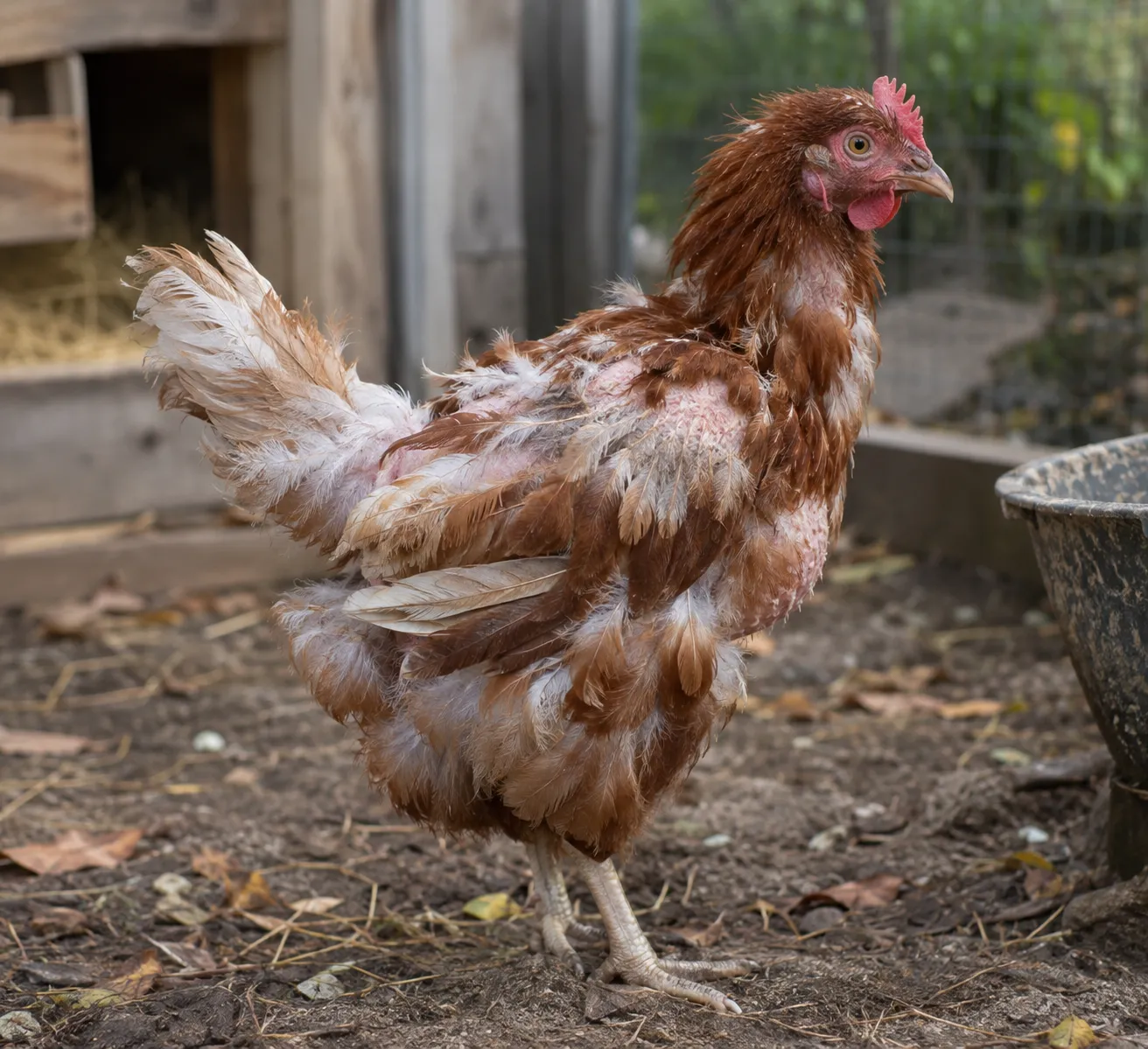
- Feather damage or feather loss.
- A drop in eggshell quality.
These signs are not specific to nutrition problems; diseases and environmental conditions can produce similar results. So if the signs persist, an evaluation by a veterinarian may be needed.
In conclusion: The most common mistakes in feeding chickens are feeding only grain, overdoing extra foods, offering layer feed to chicks and pullets, and overlooking the importance of water. To prevent these problems, use a balanced complete feed, store feed under proper conditions, and follow a feeding program suited to the chickens’ age, breed, and production purpose.
Sources
- University of Georgia Cooperative Extension — Nutrition for the Backyard Flock
- Merck Veterinary Manual — Management of Backyard Poultry
- University of Minnesota Extension Poultry Extension — Feeding Chickens for Egg Production
- University of Florida IFAS Extension — Raising Backyard Chickens for Eggs
- FAO – Nutrition and Feeding
- FAO – Poultry Feed Availability and Nutrition
- Utah State University Extension – Principles of Feeding Small Flocks of Chickens at Home
- “Feeding the Flock” — University of Maryland Extension.
Have a question about this topic? Email us via the contact page.