Getting Started
Molting in Chickens: When It Starts, Why It Happens and Egg Production
Molting in chickens is a natural process most often seen in the fall. When it starts, why hens molt, how it affects egg production and the return to laying.
Published: · 7 min read
Contents (8)
- 01Molting in Chickens: When Does It Start, Why Do Chickens Molt and How Does It Affect Production?
- 02When do chickens molt?
- 03Why do chickens molt?
- 04What changes are seen in chickens during the molt?
- 05Does molting affect egg production?
- 06What should you pay attention to during the molt?
- 07How can you tell a natural molt from feather loss caused by disease?
- 08Conclusion: Is molting normal in chickens?
Molting in Chickens: When Does It Start, Why Do Chickens Molt and How Does It Affect Production?
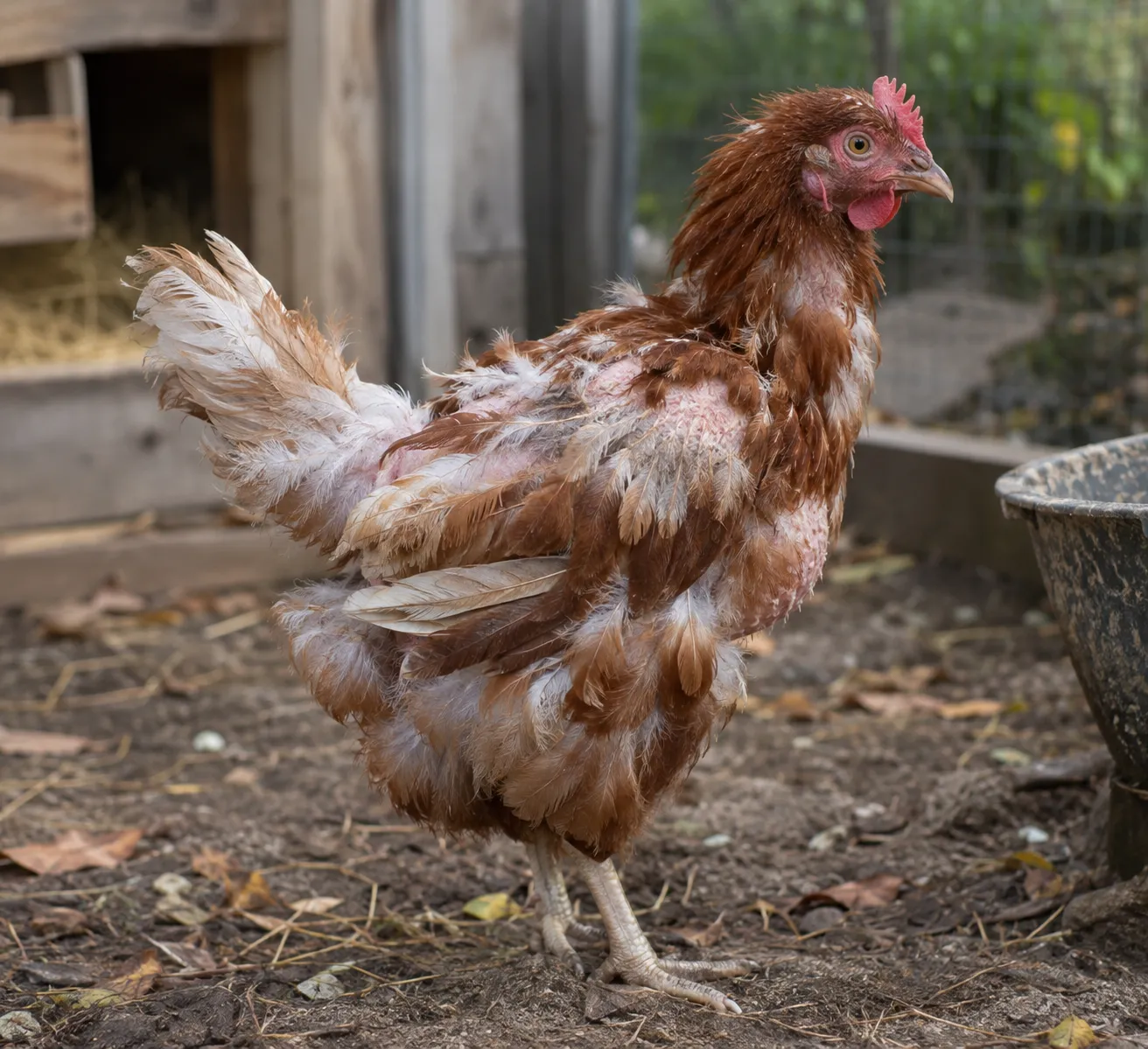
In chicken keeping, molting is a natural process that is commonly seen, especially in the fall months. During this period, the old feathers on a chicken’s body fall out and new ones grow in their place. However, molting is not only a change in outward appearance; it can also affect egg production, feed intake, body weight and reproductive activity.
So why do chickens molt, how long does the process last, and what should keepers pay attention to during this period?
1. When do chickens molt?
Natural molting in chickens is most often seen in the later stages of the production period and in the fall months. That said, not all chickens molt at the same time. Age, breed, nutrition, laying history and day length affect the timing of this process.
Day length is important in the timing of molting. Shortening days and changes in the lighting pattern are linked to the hen’s reproductive and feather renewal cycle. However, because commercial operations use artificial lighting, molting does not always happen in the fall.
- Fall: The natural feather renewal process can become noticeable as the days get shorter.
- With age: A noticeable molt can be seen, especially in hens that have been laying for a long time.
- Other times of the year: Feather loss can also occur due to nutritional problems, stress, parasites or feather pecking.
The important point is this: Not every feather loss is a natural molt. Feathers being pulled out in patches, wounds on the skin or intense itching may point to different problems.
2. Why do chickens molt?
Molting is a natural biological process that allows the chicken to renew its aging or worn feathers. Hormonal changes, day length and nutritional status play a role together in this process.
1. Shorter day length
In the fall, shorter days can affect chickens’ reproductive hormones and laying pattern. This change is linked to natural molting and to the drop in egg production.
2. Feather renewal
Feathers wear out over time. During the molt, new feathers replace the old ones. Because of keratin production, growing new feathers requires a significant amount of protein and amino acids.
3. Stress, poor nutrition and parasites
Not every feather loss is seasonal. An unbalanced diet, external parasites, injuries and other chickens pulling out feathers by pecking can also lead to thinning feathers.
3. What changes are seen in chickens during the molt?
Some changes may appear in the appearance and behavior of a chicken that goes into molt.
-
Thinning feathers: Feather loss can be seen especially on the neck, back, breast and wings. The order and intensity of feather loss is not the same in every chicken.
-
New feathers growing in: New feathers emerging from the skin may at first look short, thin and covered in a sheath. These feathers can be sensitive while they develop.
-
Change in body weight: Changes in feather production and the laying cycle can affect body composition.
-
Drop in egg production: Some hens lay fewer eggs, while others may stop laying completely for a while.
-
Temporary decline in appearance: Because the feather cover becomes sparse, the hen may look more unkempt. As the feathers are renewed, her appearance improves again.
A study published in the journal Animal in 2025 reported that in laying hens in which molting was induced under controlled conditions, body weight decreased, and breast tissue and ovary weight also dropped.
4. Does molting affect egg production?
Yes. Molting can reduce egg production, and in some hens laying may stop temporarily. One of the main reasons for this is that feather renewal and egg production draw on the body’s resources at the same time.
We can look at the changes in egg production during the molt under three headings:
1. Laying frequency may decrease. Shorter day length and changes in reproductive activity can lower egg production. Especially in the fall and winter months, these two effects can be seen together.
2. The body’s resources are reallocated. The proteins in the structure of feathers rely on the same general nutrient sources as the nutrients used in egg production. This is why adequate and balanced nutrition is important during the feather renewal period.
3. Returning to lay may take time. Laying may not start right away after the molt is complete. Age, breed, day length, health status and nutrition affect the return to production. Molting in chickens usually lasts 2–3 months; however, in some hens it can extend to 4–6 months.
Although molting and a drop in egg production are seen during the same period, not every drop in production is caused by molting. Insufficient light, temperature, disease, parasites, feed problems and similar conditions should also be investigated.
5. What should you pay attention to during the molt?
The goal during this period is to help the hen renew her feathers in a healthy way and maintain her overall condition.
1. Provide balanced and adequate protein
Feathers are made up largely of proteins called keratin. This is why it is important that chickens eat a balanced feed that meets their protein and especially essential amino acid requirements during the feather renewal period. As a general recommendation, a 20% protein diet is usually sufficient.
2. Keep clean water available at all times
Water is necessary for using nutrients and for the body’s normal functions. Keep waterers clean and make sure all chickens can easily reach water.
3. Keep the coop dry and clean, with drafts under control
When the feather cover thins, chickens can be more affected by cold conditions. It is important to keep the coop dry, keep the litter clean and prevent direct cold drafts. At the same time, do not shut off ventilation completely; do not let moisture and harmful gases build up.
4. Check for parasites and feather pecking
If you see wounds, scabs or intense itching on the skin, parasites at the base of the feathers, or other chickens pulling out feathers, assess whether the problem is a natural molt or not. Parasite infestations can also negatively affect egg production and body condition. Pecking and injury should not be allowed: If other chickens peck at bare skin, the injured hen should be separated temporarily. Newly emerging feathers should not be pulled out, and creams and oils should not be applied at random.
5. Monitor weight, feed intake and egg count
Check the chickens’ condition regularly. If rapid weight loss, marked lethargy, loss of appetite, respiratory signs or serious wounds on the skin are seen, get help from a veterinarian. Recording when the drop in egg numbers started also helps in understanding its cause.
6. How can you tell a natural molt from feather loss caused by disease?
Observation In a natural molt When a problem is suspected Feather loss Old feathers falling out and new feathers growing in Feathers breaking, being pulled out or disappearing completely in certain areas Skin Usually no obvious wounds Redness, scabs, bleeding or intense irritation Behavior The chicken may generally behave normally Constant scratching, restlessness, lethargy or loss of appetite Production Egg numbers may decrease A severe or prolonged drop may be accompanied by other signs of disease
This table is not a definitive diagnostic method. Parasites and feather pecking in particular can also appear during the same period as a natural molt. In suspicious cases, an examination by a veterinarian is absolutely necessary.
Conclusion: Is molting normal in chickens?
Yes, molting in chickens is a natural process. It is usually seen in the fall and allows new feathers to replace the old ones. During this period, egg production may decrease or laying may stop temporarily.
During the molt, attention should be paid to the chickens’ balanced nutrition, their access to clean water and keeping the coop clean and dry. In addition, parasites and abnormal feather loss should be checked.
Remember: Molting is normal, but if there is excessive feather loss, wounds, lethargy or a prolonged drop in egg production, another health problem may be involved.
Sources
- How molting of laying hens influences body composition and blood parameters
- Molecular Signaling and Nutritional Regulation in the Context of Poultry Feather Growth and Regeneration. Frontiers in Physiology
- An appraisal of moulting on post-moult egg production and egg weight distribution in white layer hens; meta-analysis
- University of Minnesota Extension: Raising chickens for eggs.
- University of Georgia Cooperative Extension: Nutrition for the Backyard Flock
- Merck Veterinary Manual: Mites of Poultry and Behavior Problems of Poultry.
- Molting of Laying Hens – Mississippi State University
- Hen Molting: What To Egg-spect – Texas A&M University
- Merck Veterinary Manual – Behavior Problems of Poultry
- Penn State Extension – Wounds in Poultry
Have a question about this topic? Email us via the contact page.