Breeds
Sebright Chicken: Traits, Eggs and Care
Sebright: a true bantam ornamental breed with gold or silver, black-laced feathers. Origin, weight, 50–80 eggs a year, care and broodiness.
Published: · 6 min read
Contents (11)
- 01The Sebright Chicken: Traits and Care
- 02Origin and history of the Sebright chicken
- 03Physical traits of the Sebright chicken
- 04How much does a Sebright chicken weigh?
- 05Color varieties of the Sebright chicken
- 06The most interesting trait of the Sebright rooster
- 07How many eggs does a Sebright hen lay per year?
- 08How do you care for Sebright chickens?
- 09Do Sebright hens go broody?
- 10Who is the Sebright chicken suitable for?
- 11Conclusion
The Sebright Chicken: Traits and Care
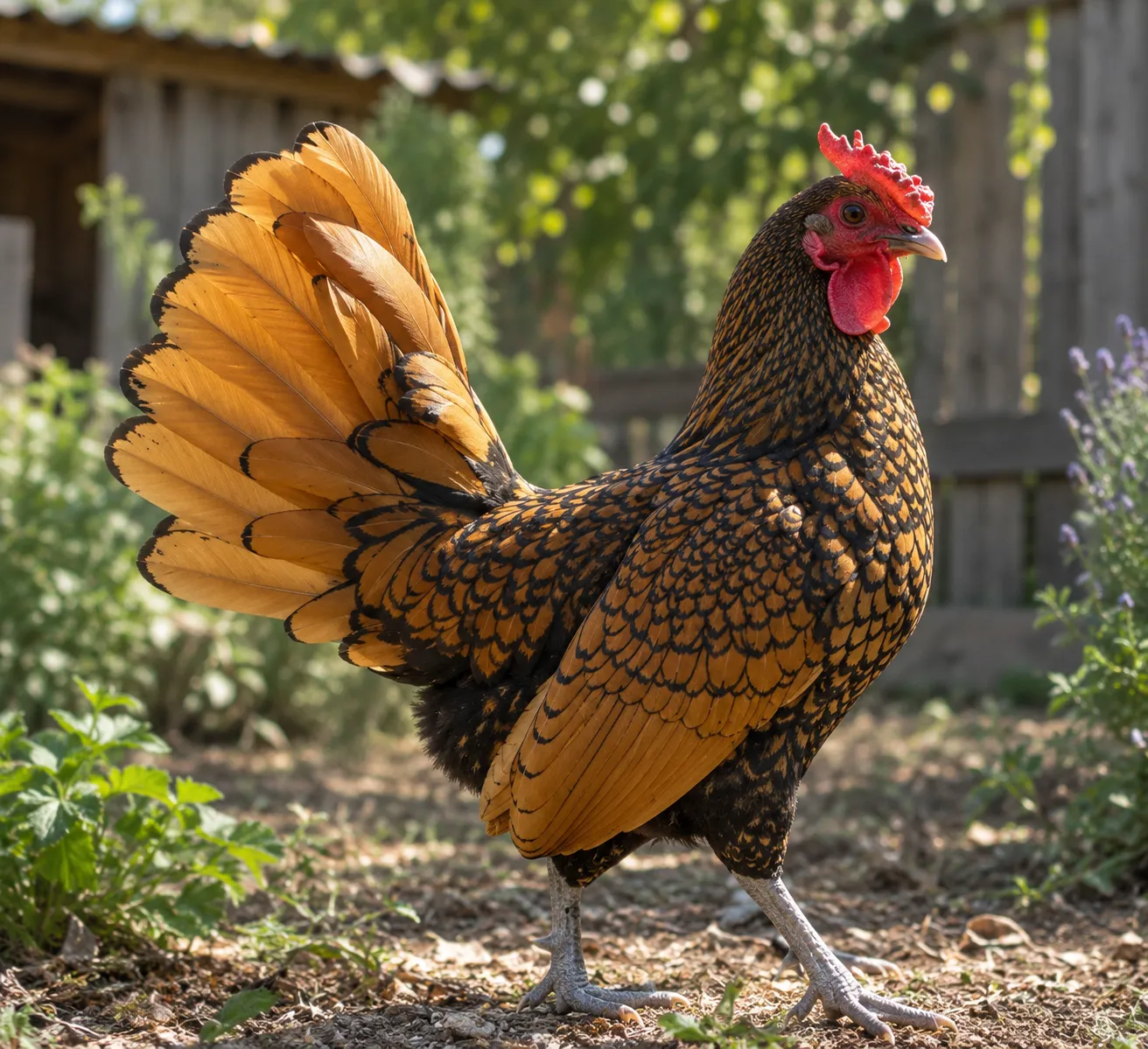
With its elegant look, small body and the black pattern that outlines the edges of its feathers, the Sebright is one of the world’s well-known ornamental chicken breeds. Known in international sources as the Sebright Bantam (in Turkey it is called the Zibrit), this breed stands out especially for its gold and silver feathers.
One of the most interesting traits that sets the Sebright apart from other ornamental chickens is that its roosters also have a rounded feather structure similar to that of the hens. It is not a miniaturized version of a large chicken breed but a true bantam breed with traits of its own.
1. Origin and history of the Sebright chicken
The Sebright chicken was developed in the early 19th century by the English breeder Sir John Saunders Sebright. Sebright’s goal was to create an ornamental chicken breed with a small body and distinct, lace-like patterns on the edges of its feathers.
Oklahoma State University’s overview of poultry breeds states that the Sebright was developed around 1800 and was recognized by the American Poultry Association in 1874 in its gold and silver colors.
The Sebright is classified as a true bantam. This term means that the breed has no large-sized counterpart and is a naturally small chicken breed.
2. Physical traits of the Sebright chicken
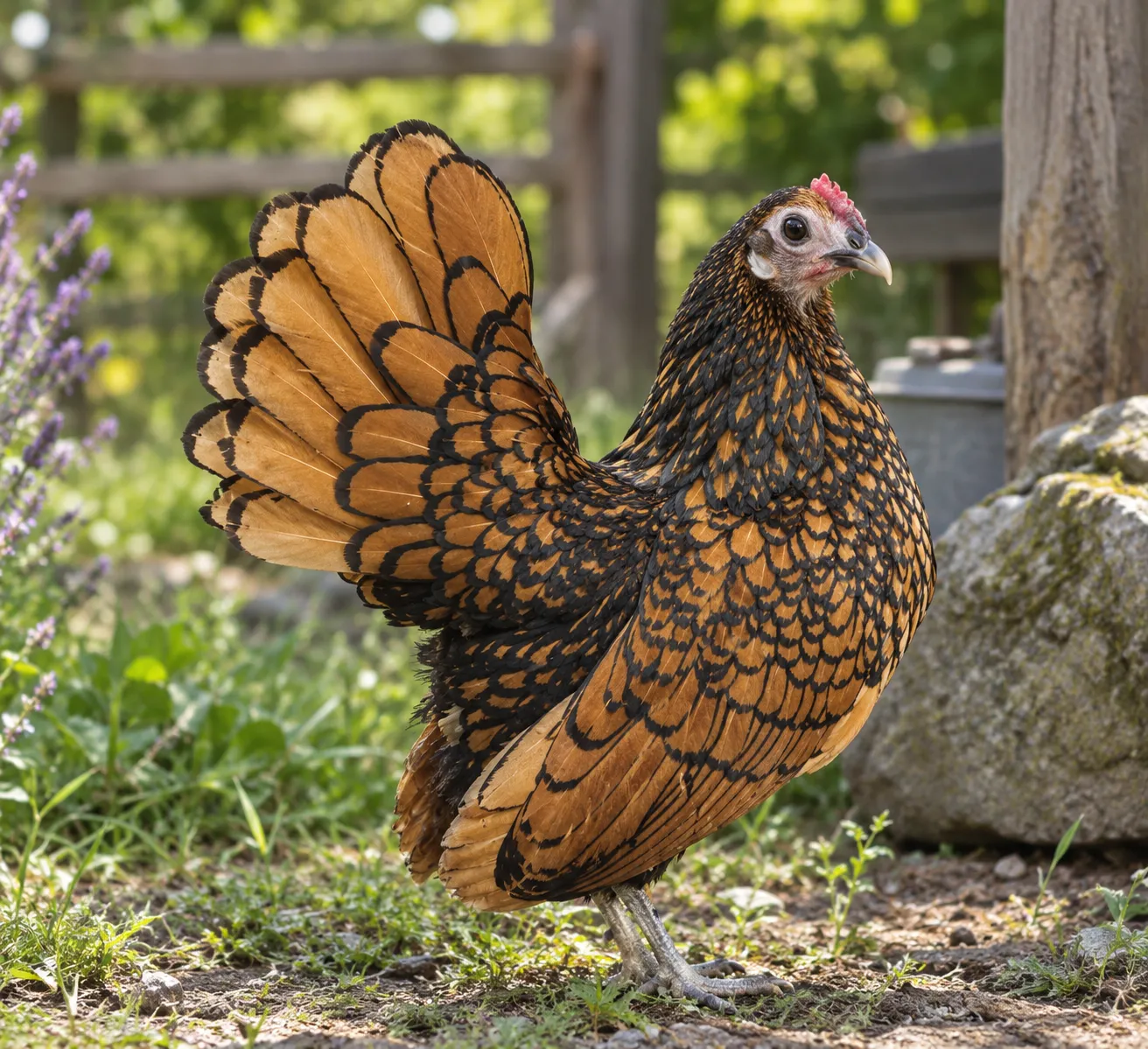
The Sebright’s body is short, compact and rounded. Its breast is prominent, its back is short, its wings slope downward and its tail is carried high. Its upright, showy stance is among the distinguishing traits of this breed.
Its main physical traits are:
- Comb: A rose comb, usually in red or dark red tones.
- Legs: Featherless legs in slate blue or gray-blue tones.
- Eyes: Eyes as dark as possible.
- Feather structure: Short, dense feathers with rounded tips.
- Body shape: Short back, prominent breast and a tail carried high.
In the British Sebright breed standard, the edge patterns of the feathers and the body type are important judging criteria. This is why the quality of the breed is not determined by its colors alone.
How much does a Sebright chicken weigh?
The British breed standard published by The Sebright Club gives a weight of about 620 g (1.4 lb) for the rooster and 510 g (1.1 lb) for the hen. The Oklahoma State University source gives values of about 624 g (1.4 lb) for the rooster and about 567 g (1.25 lb) for the hen. These differences may stem from the breed standard used. So these values should be seen not as exact weight limits for every bird, but as references showing the breed’s typical size.
3. Color varieties of the Sebright chicken
The Sebright Club in England recognizes two basic colors of the breed: gold and silver. In both varieties, the dark edge lines around the feathers make the bird’s appearance stand out.
Gold Sebright: The ground color of the feathers is in gold or warm golden-brown tones. The glossy, greenish-black edges surrounding each feather create a striking contrast.
Silver Sebright: The feathers are edged in black on a silvery-white ground. The light ground color and dark edges give this variety its distinctive look.
Some European breed standards may also accept different laced patterns in lemon or warm, golden-yellow-cinnamon tones. However, the recognized colors may vary by country and by the standard used.
4. The most interesting trait of the Sebright rooster
The trait that sets the Sebright rooster apart from the roosters of many other chicken breeds is called hen-feathering (hen-type feathering).
Normally, roosters have long, pointed feathers on the neck and back, and curved, long sickle-shaped feathers in the tail. These typical male feathers are not seen in Sebright roosters. Instead, they have shorter feathers with rounded tips, similar to those of the hens.
This trait shows that the Sebright is not just a small ornamental chicken but also has a distinctive biological trait of its own.
5. How many eggs does a Sebright hen lay per year?
The Sebright is raised primarily for ornamental and exhibition purposes, not for egg production.
The Livestock Conservancy (a US-based livestock conservation organization) and Oklahoma State University sources state that Sebright hens can lay about 50–80 small eggs per year. This range can vary depending on the raising conditions and the line the bird comes from.
The shell color of their eggs is usually white or cream. Because of their small body size, their eggs are also smaller than those of commercial laying hens.
The Sebright may not be a suitable first choice for those looking for high egg production. However, it is an attractive option for keepers whose priorities are appearance, breed traits and ornamental poultry keeping.
Another important point: because of a breeding history of about 200 years of inbreeding and a limited gene pool, fertility problems can be seen in Sebright eggs.
6. How do you care for Sebright chickens?
Because the Sebright is a small chicken, safe housing, balanced nutrition and environmental conditions are important in its care. It is noted in particular that the chicks can be delicate and that raising the breed comes with some difficulties.
Coop conditions
Sebright chickens should be kept in a dry, clean and well-ventilated coop. They should be given shelter where they can be protected from rain, strong wind and extreme temperature changes.
Sebrights are active birds and good fliers, so they need a secure environment. For this reason, it can be helpful for fences to be high enough or for the run to be properly covered on top.
Health and disease prevention
Oklahoma State University points to the Sebright’s susceptibility to Marek’s disease and states that this breed may require more care from beginner keepers.
7. Do Sebright hens go broody?
Although broodiness and chick-rearing behavior can be seen in Sebright hens, it should not be assumed that every hen will go broody. The Oklahoma State University source states that the breed’s broodiness and mothering behavior may be weak.
8. Who is the Sebright chicken suitable for?
The Sebright is especially suitable for keepers who love small, showy ornamental chickens. The distinct patterns of its gold and silver colors make the breed stand out in exhibition breeding.
That said, the Sebright being small does not mean its care needs are minimal. Its ability to fly, the delicacy of its chicks and the difficulties in breeding should be taken into account. For this reason, it may not be the best option for those looking only for easy care or high egg production.
Conclusion
The Sebright is an ornamental chicken developed in England in the early 19th century, one of the true bantam breeds and known for its distinctive feather patterns. Its gold and silver varieties, short and rounded feather structure, rose comb and the hen-feathering trait also seen in its roosters set it apart from other breeds.
Although it can lay about 50–80 small eggs per year, the main purpose of raising it is not egg production but ornamental and exhibition breeding. A healthy Sebright flock needs a secure coop, balanced nutrition and careful attention, especially during the chick stage.