Breeds
Cream Legbar Chicken: The British Breed Known for Blue Eggs
Cream Legbar chickens: a crested, autosexing British breed that lays blue eggs. Origin, appearance, egg production, temperament and buying tips.
Published: · 5 min read
Contents (10)
- 01 Cream Legbar Chicken: The British Breed with Blue Eggs and a Distinctive Look
- 02Origin and history
- 03Physical traits and appearance
- 04Egg production and egg traits
- 05Can you tell the chicks’ sex from day one?
- 06Temperament and keeping conditions
- 07Broodiness and mothering
- 08Weight and meat yield
- 09Who is the Cream Legbar suitable for?
- 10What to look for when buying Cream Legbars
 Cream Legbar Chicken: The British Breed with Blue Eggs and a Distinctive Look
The Cream Legbar is a chicken breed of British origin, known for its distinctive crest, gray and cream plumage, and blue eggs. It draws interest among backyard keepers both for its egg production and for its unusual appearance. One of the most important features that sets this breed apart from other chickens is that, in suitable lines, the sex of the chicks can be told apart on the day they hatch by their down color and markings. Scientifically, this trait is called autosexing.
1. Origin and history
The development of the Cream Legbar goes back to chicken breeding work carried out around the University of Cambridge in England in the first half of the 20th century. Geneticists Reginald Crundall Punnett and Michael Pease are known for work aimed at developing a chicken breed whose sex could be identified at hatch and that was also a good layer.
The Legbar family is founded on breeds such as the Brown Leghorn and the Barred Plymouth Rock. The White Leghorn and Araucana-derived chickens carrying the blue egg trait also played a role in the emergence of the Cream Legbar. This work produced the Cream Legbar type, known for its cream tones, crest and blue eggs.
The breed standard was accepted by the Poultry Club of Great Britain in 1958.
2. Physical traits and appearance
The Cream Legbar is a laying chicken considered to fall between light and medium weight, with an active and elegant build. Its long legs, upright stance and the small crest at the back of its head are among the breed’s distinguishing features.
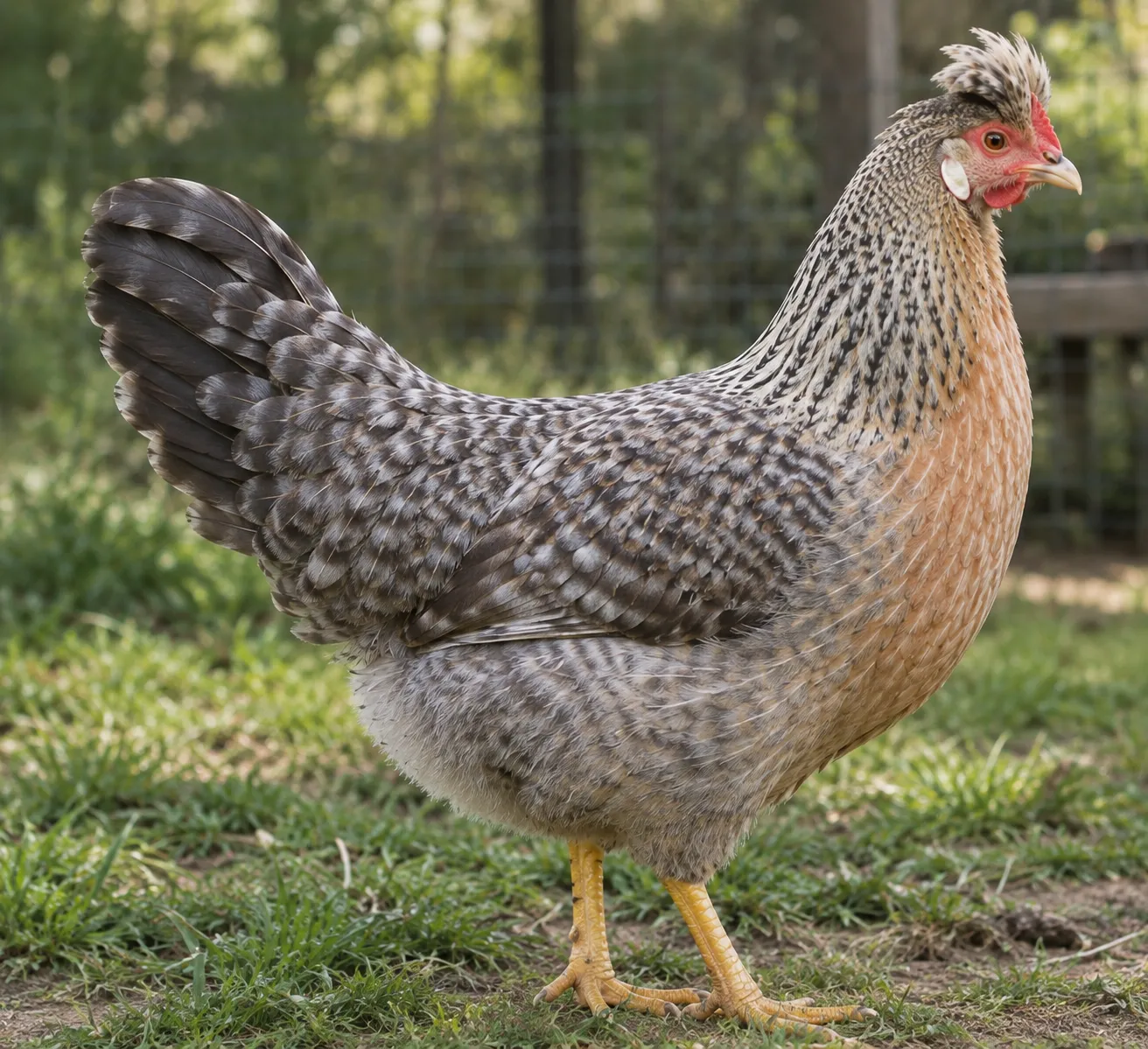
The hen’s appearance: In females, the body is generally silvery gray. The breast carries warm, salmon-like tones, while the hackle and back feathers show gray-cream markings. The crest on the head is usually a mix of cream and gray.
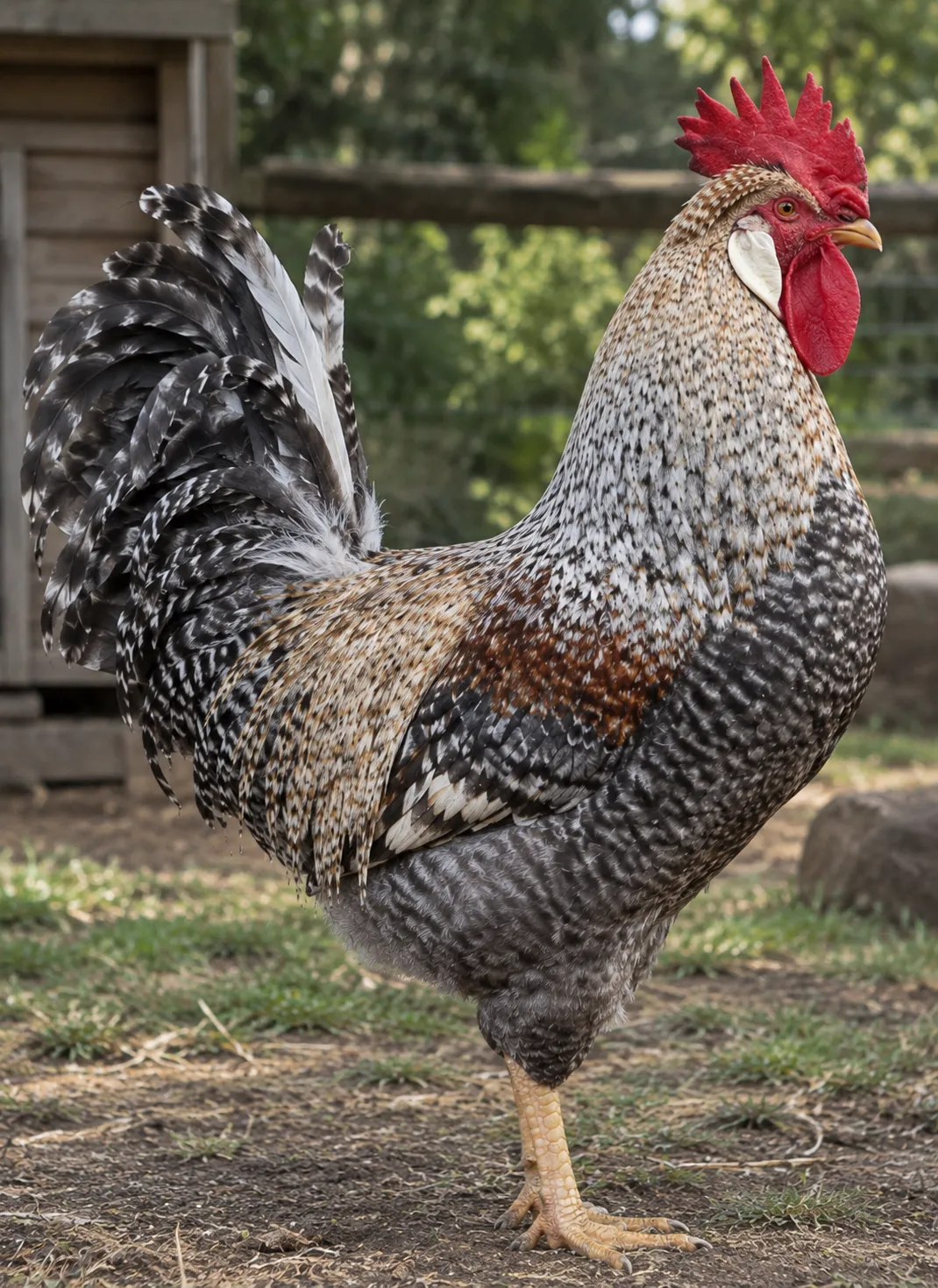
The rooster’s appearance: Males stand out with cream hackle feathers, gray and dark barred body markings, and a showier tail. Roosters usually have a more upright stance and a larger body.
Other distinguishing features:
- Comb: Single, usually red and upright.
- Earlobes: Whitish or cream-white.
- Legs: Usually yellow and clean (unfeathered).
- Head: A small crest extending toward the back.
- Body: Light, agile and suited to the laying type.
The intensity of feather color and markings can vary depending on breeder lines and genetic makeup. In particular, some lines that have lost the genetic cream trait may drift away from the standard Cream Legbar appearance.
3. Egg production and egg traits
The Cream Legbar’s most popular feature is its blue and blue-green eggs. This trait is directly linked to colored egg production, one of the purposes for which the breed is kept.
Around 200 eggs a year is an approximate figure given in general breed descriptions; it does not mean every hen will reach this number. Age, nutrition, day length, health and genetic production level all affect output.
A blue shell does not automatically mean the egg is more nutritious than other eggs. Shell color is primarily a genetic trait.
 4. Can you tell the chicks’ sex from day one?
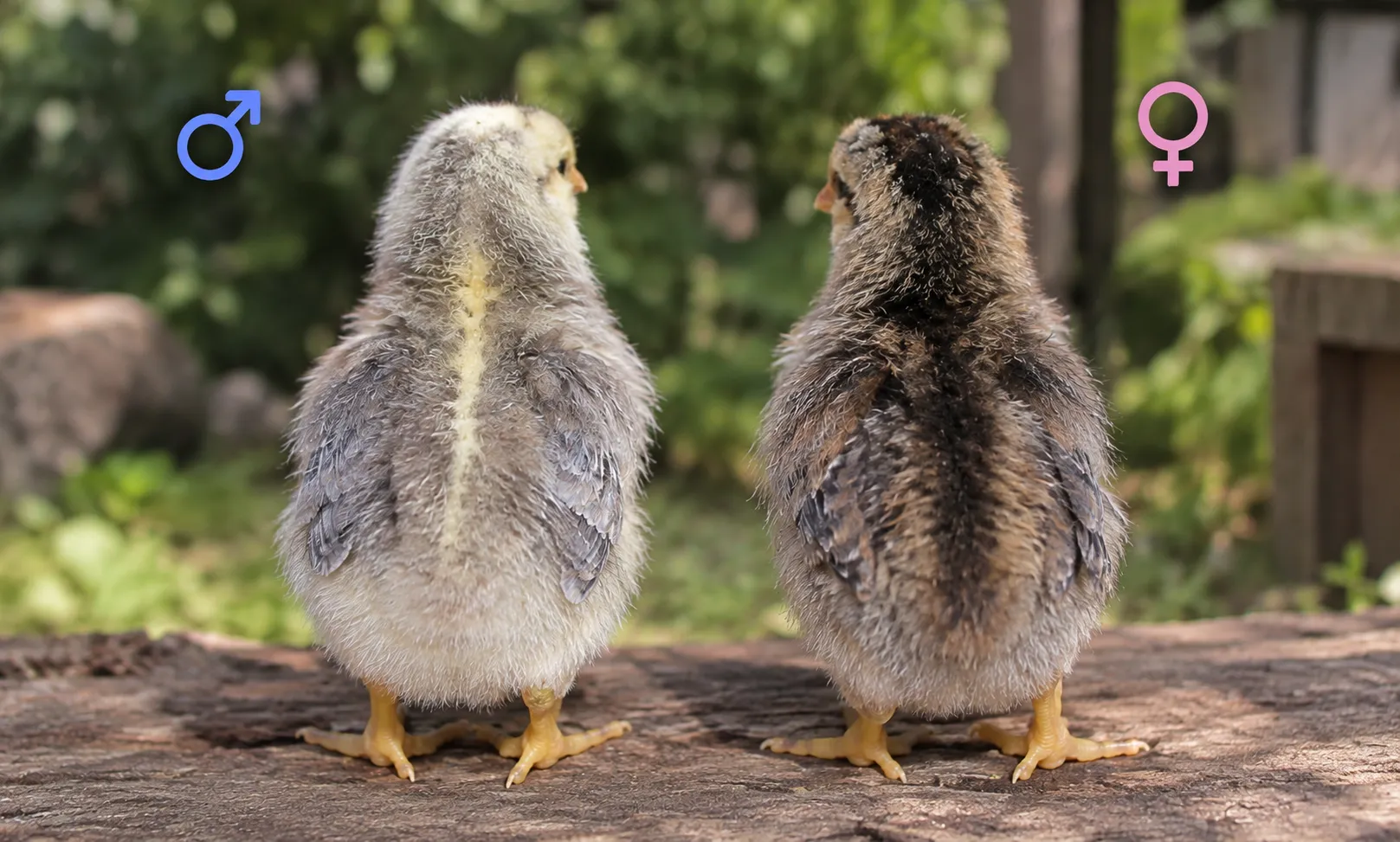
Yes. One of the Cream Legbar’s most important features is autosexing, meaning the sex of the chicks can be told apart by their down markings on the day they hatch.
This trait relies on sex-linked feather patterns being passed down in a specific way from generation to generation.
- Female chicks: Usually have darker, more distinct stripes on the head, back and around the eyes.
- Male chicks: Usually lighter in color, with fainter back markings and a more distinct light-colored patch on the head.
This difference matters especially for producers raising large numbers of chicks, because it makes it easier to separate female and male chicks early on. However, reading the markings correctly requires knowing the breed standard. In crossbreds or non-standard lines, this distinction may not work as reliably.
5. Temperament and keeping conditions
The Cream Legbar is an active, curious chicken that likes to explore its surroundings. Thanks to its active nature, it can be well suited to roaming open areas and foraging. That said, some individuals can be flighty and sensitive to sudden movements.
6. Broodiness and mothering
The Cream Legbar was developed primarily for egg production and its autosexing trait. For this reason, the natural tendency to go broody is not strong in every individual. Some hens may go broody, while others may keep laying and never sit on eggs.
7. Weight and meat yield
The Cream Legbar is not a heavy meat chicken. Its build is primarily suited to egg production. Under published standards, adult roosters can be roughly 2.7–3.4 kg (6.0–7.5 lb) and hens roughly 2.0–2.7 kg (4.4–6.0 lb).
These values apply to standard-size birds; nutrition, age, sex and breeding line can change actual weight. For keepers whose main goal is meat production, meat breeds may be a better fit.
8. Who is the Cream Legbar suitable for?
Those who want colored eggs:
Thanks to its blue eggs, it is an attractive option for small-scale egg production and backyard keeping.
Those interested in breeding and genetic traits:
Being able to tell the chicks’ sex from day one can be an advantage in selecting breeding stock and planning a flock.
Those looking for a chicken with a different look:
Its crest and gray-cream markings also make this breed a popular choice for ornamental and hobby flocks.
On the other hand, those who want a very calm chicken or whose priority is high meat yield should also consider other breeds.
9. What to look for when buying Cream Legbars
Not every chicken sold under the Cream Legbar name meets the breed standard to the same degree. Especially when buying breeding stock, the following points are important:
- Egg color: Ask whether the breeding flock really lays blue or blue-green eggs.
- Chick markings: Confirm that the autosexing trait shows up reliably in that flock.
- Adult appearance: Compare the crest, body color and barred markings with the breed standard.
- Breeding records: If possible, review parent information and egg production records.
- Health and condition: Assess the birds’ activity, feather condition, eyes, breathing and overall condition.