Breeds
Rhode Island Red Chicken: Traits, Eggs and Temperament
Rhode Island Red chickens: an American dual-purpose breed known for large brown eggs and hardiness. Egg production, temperament, pros and cons.
Published: · 4 min read
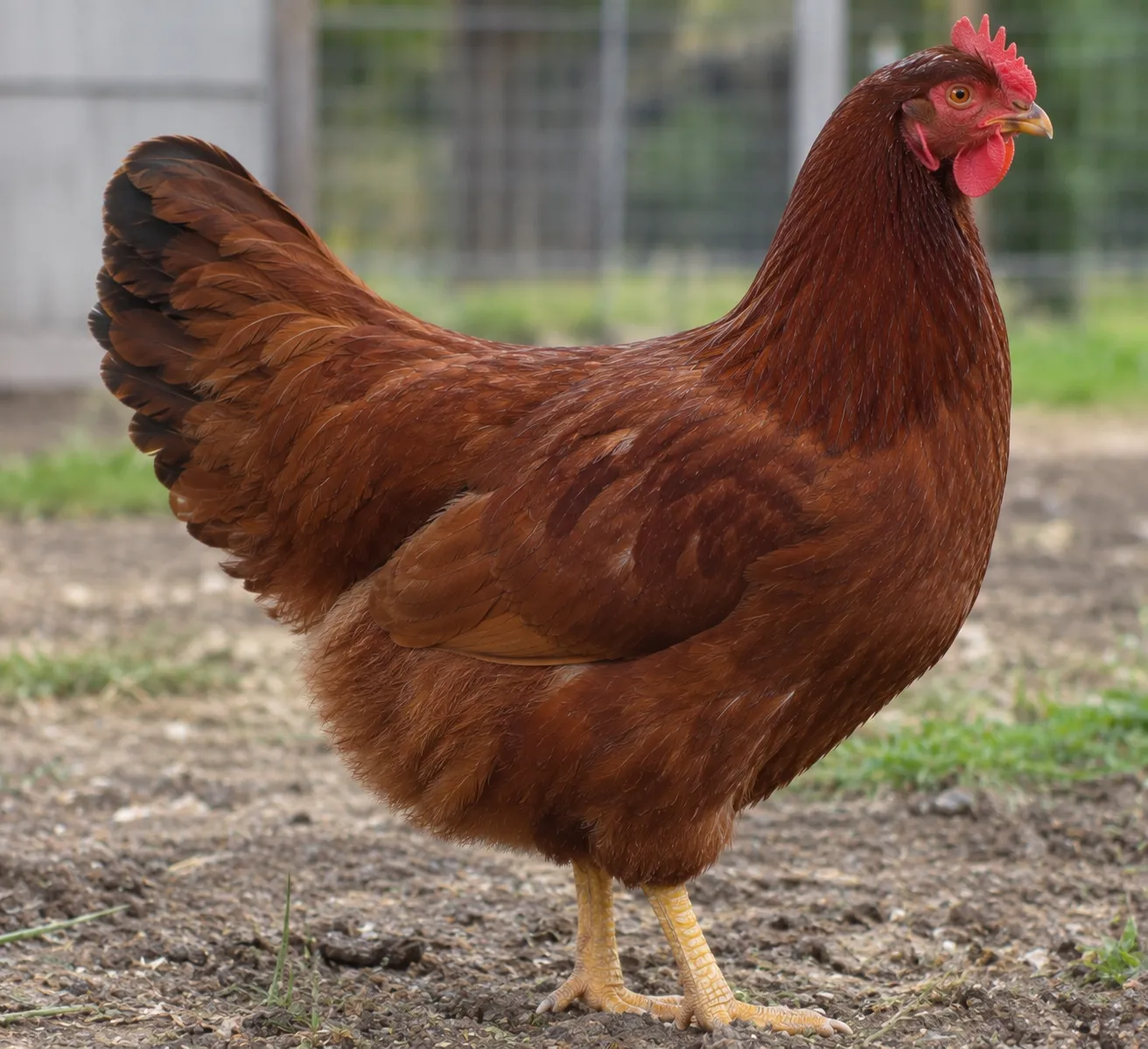
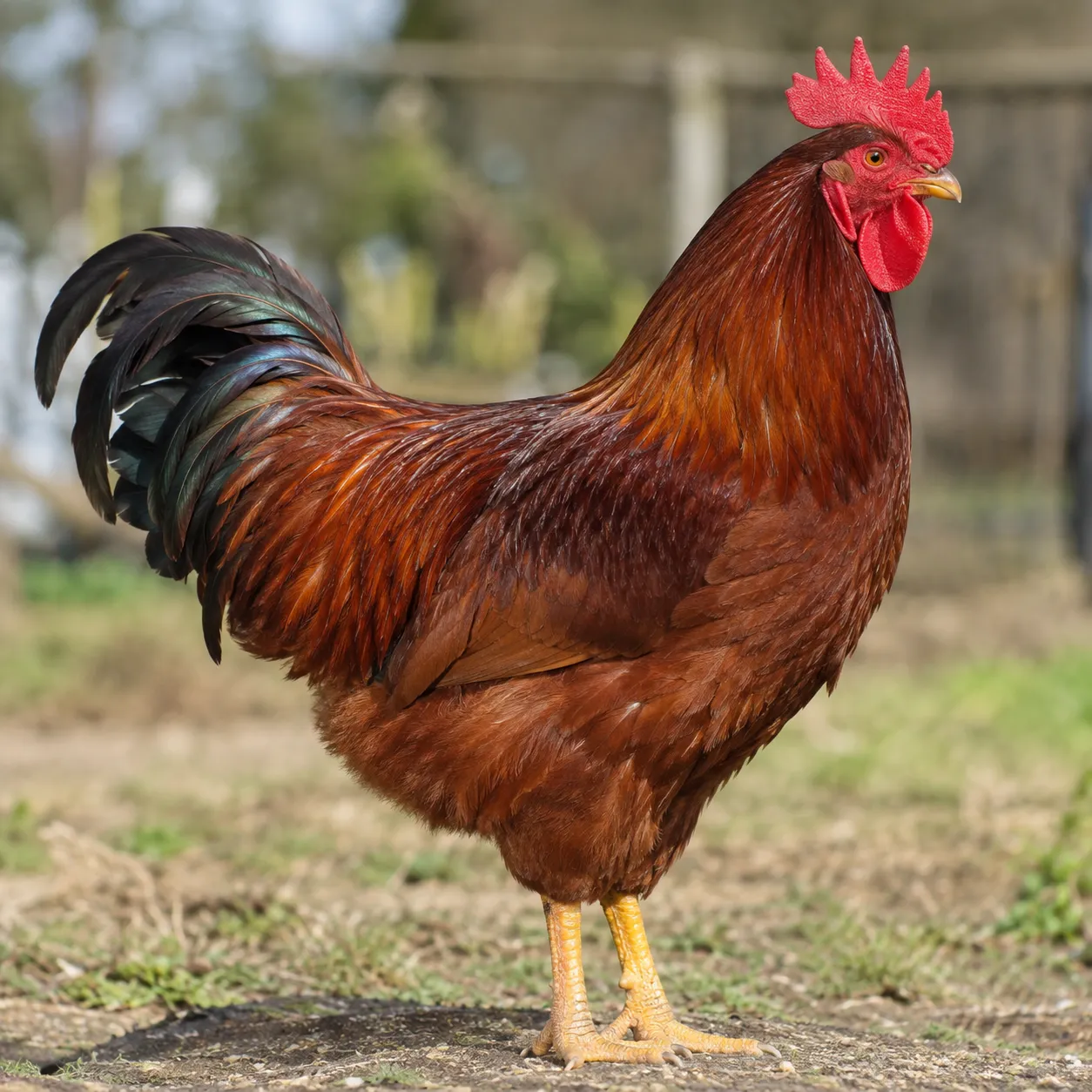 The Rhode Island Red is an American chicken breed named after the state of Rhode Island in the United States. The breed was developed in Massachusetts and Rhode Island in the late 1800s. Chickens such as the Malay, Java and Brown Leghorn are generally accepted to have played a role in its formation. The Malay influence is said to have contributed to the breed’s deep red color and strong build. There are single comb and rose comb varieties.
What kind of chicken is it?
The Rhode Island Red’s most important trait is its versatility.
Breeders’ original goal was:
To create a strong chicken that lays well and can also be used for the table.
For this reason, the Rhode Island Red is:
- 🥚 a strong layer,
- 🍗 a moderate-to-good meat bird,
- 🌱 a good forager,
- 💪 hardy,
- 🏡 a breed well suited to small flocks.
Live weight
Standard values:
| Weight | |
|---|---|
| 🐓 Rooster | 3.85 kg (8.5 lb) |
| 🐔 Hen | 2.95 kg (6.5 lb) |
| Cockerel | 3.40 kg (7.5 lb) |
| Pullet | 2.50 kg (5.5 lb) |
What are its eggs like?
This is one of the Rhode Island Red’s strongest points. Its eggs are brown and large. The Livestock Conservancy describes the egg as large.
When it comes to egg production, however, there is a notable difference between sources:
| Source | Eggs per year | Note |
|---|---|---|
| Oklahoma State University | 150–200 | |
| The Livestock Conservancy | 200–300 | Some hens may start laying at 6 months of age. |
| Association of Avian Veterinarians | 200–300 | Medium-large/large brown eggs. |
So why are the figures different?
Because today there are different production types of Rhode Island Red. The Livestock Conservancy explains that as the Rhode Island Red was selected for egg production from the 1940s onward, some lines became smaller, lighter in color and less broody, while old-type Rhode Island Reds are larger, darker and more inclined to go broody.
Meat yield
The Rhode Island Red was originally developed for both meat and eggs.
Thanks to its large, strong body, it can also be used for meat. The Livestock Conservancy still classifies it as dual-purpose.
But there is an important detail: its meat side is not as strong as its egg side.
Oklahoma State University also notes that today the Rhode Island Red is used more for egg production than for meat production. Among the reasons are that dark feathers remain more visible on the carcass, and its good egg production.
What is its temperament like?
It is generally regarded as a calm and hardy chicken.
Hens
They are generally:
- curious,
- active,
- hardy,
- able to get used to people,
- good foragers.
Roosters
This is the point to watch.
Some Rhode Island Red roosters can be aggressive. For this reason, temperament should always be taken into account when choosing a breeding rooster.
How does it do free-range?
The Rhode Island Red is a successful forager and actively explores its surroundings when free-ranging. It also has the important trait of being able to keep laying even in poor housing and with lower-quality feed.
How does it handle cold and hot weather?
The Rhode Island Red is generally a hardy breed and does well in both hot and cold climates. In addition, the rose comb variety has an advantage over the single comb type in very cold regions. In single-combed roosters, there is a risk of the comb getting frostbite in extreme cold.
Broodiness and mothering
Broodiness can occur in Rhode Island Red hens. However, this trait has been reduced, especially in modern lines selected for high egg production.
So it is more accurate to think of it this way:
- Old-type Rhode Island Red → more inclined to go broody
- Line selected for high egg production → less inclined to go broody
Colors
Feather color is one of the breed’s most characteristic features: deep red / mahogany red.
It is normal to have black feathers, especially in the tail and wings. The color can fade with long exposure to the sun.
Advantages for hobby keepers
Strengths
- ⭐ Very good layer
- 🥚 Large brown eggs
- 💪 Very hardy
- 🌱 Very well suited to free-ranging
- 🌦️ Adapts to different climates
- 🏡 Suitable for small flocks
- 🍗 Can also be used for meat
- 🐔 Active and a good forager
- 🥚 Can keep laying even in tough conditions
- 👨🌾 Suitable for beginners
Disadvantages
Roosters can be aggressive
One of the most important disadvantages.
High-production lines and the old type are not the same
When buying, it is important to ask the breeder which Rhode Island Red line they have.
Its meat side is not as strong as its eggs
Although it is dual-purpose, today it is regarded more as a laying breed.